Labor Area
SATISFACTION NOT ONLY PRODUCTION
At Los Horcones, all members cooperate in the production of goods and services. We try to organize labor in such a way that every member can be efficient, productive and enjoy work.* Men and women have equal opportunities and the number of hours need to work ranges from 6 to 9 hours a day -sometimes more-, depending on community needs. The variety of work increases in direct proportion to our population.
*It is not easy to organize work in a way that it is satisfactory for everyone if the community is small (20 members). When we have had 40 or more members satisfaction in work has increased because there is more variety to choose from.
One objective in this area is that each member can choose the work he/she wants to do every day and that we all do what is satisfactory and also productive. However, we still have a long way to go before we achieve this objective because we have fewer members than we need. When our population has grown to 50, the activity of the labor area has greatly improved.
|
|
|
|
|
 |
|
 |
List of jobs members currently do.
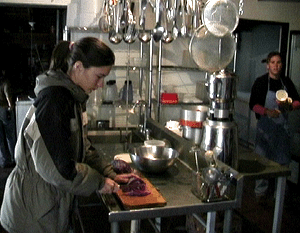
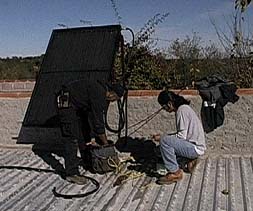
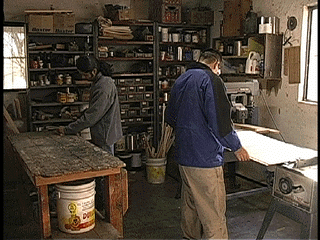
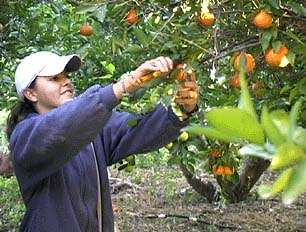
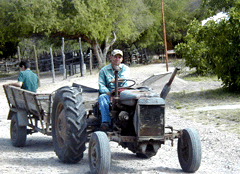
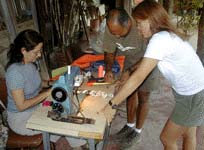
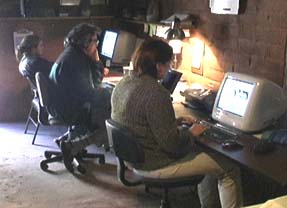
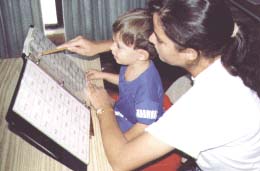
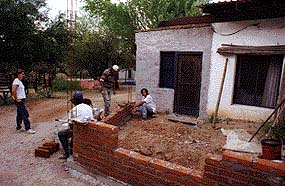
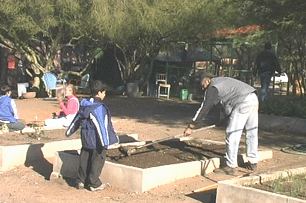
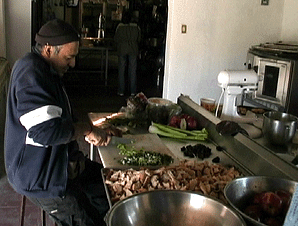
1. Cleaning Buildings. 2. Cooking. 3.Washing dishes. 4. Washing clothes. 5.Taking care of children. 6. Making cheese. 7. Teaching children. 8. Feeding chickens. 9. Feeding rabbits. 10. Feeding pigs. 11.Beekeeping. 12. Attending behavior analysis classes. 13. Shopping and doing errands in the city. 14. Watering plants and orchards. 15. Working in the vegetable garden. 16. Doing auto-mechanics. 17. Doing carpentry. 18. Writing correspondence. 19.Writing books and articles. 20. Painting. 21. Carrying out the trash. 22. Taking care of and correcting behavior problems in children who come to study at Los Horcones. 23. Doing office work. 24. Making yogurt. 25. Making bread 26. Making flan. 27. Making pies. 28.Bookkeeping. 29. Tree trimming and landscaping. 30. Doing construction work. 31. Milking cows. 32. Taking care of horses. 33. Educating members. 34. Translating articles. 35. Working in special education in our school in Hermosillo. 36.Delivering (selling) food products in Hermosillo. 37. Hosting visitors . 38. Giving talks or conferences 39. Repairing bicycles. 40. Doing ornamental welding and blacksmithing., etc.
|
|
The organization of labor area is open to all members.
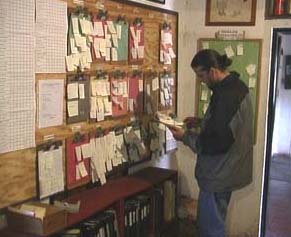 The
coordinators of the different areas in the community and any other member
or visitor can easily report a task that needs to be done. In the work office
there are clipboards for every area and we just place a note there describing
the work and urgency. For example if I notice that the car needs an oil
change, I will write a note and leave it on the auto-mechanics clipboard.
The
coordinators of the different areas in the community and any other member
or visitor can easily report a task that needs to be done. In the work office
there are clipboards for every area and we just place a note there describing
the work and urgency. For example if I notice that the car needs an oil
change, I will write a note and leave it on the auto-mechanics clipboard.
Work organization
There are various coordinators in this area, in charge
of organizing the work done by members every day. Each coordinator is in
charge of one or two weekdays. They have a list of all the work that needs
to be done in the community for its maintenance and progress. Each job on
the list includes the average time in which it could be done. Coordinators
calculate the number of hours a member needs to work weekly or daily by
adding the total time it takes to complete all the tasks on the list and
then dividing it by the number of members. Knowing how many hours we are
expected to work, we can plan -together with the work coordinator-our weekly
work schedule. Every member has his/her own work schedule posted on the
work office where we can check it any time.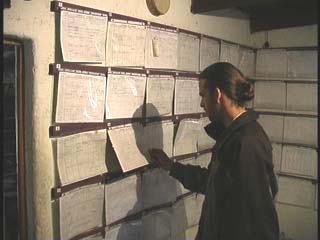
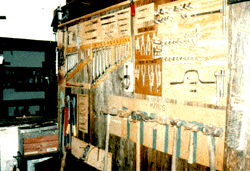
Work coordinators have classified the work into fixed work (what needs to be done on a regular basis like feeding the animals, cooking, cleaning, child care, watering plants,etc.) and occasional work (whatever comes up, like fixing a fence, replacing someone who is sick or went to the city, etc.). Most members have one or two hours of occasional work a day which is assigned the night before by the coordinator who, after reviewing the needs, has defined the priorities. Members can check the night before to see what occasional work they were assigned. If a member is not satisfied he/she can discuss it with the coordinator and arrive at an agreement.
 There
is a radio (walkie-talkie) in the work office and the work coordinator and
other members also carry one. When somebody has a question related to work,
we can call the coordinator.
There
is a radio (walkie-talkie) in the work office and the work coordinator and
other members also carry one. When somebody has a question related to work,
we can call the coordinator.
Satisfaction not just production
Our objective is that each members be satisfied with his/her
work. We arrange the environment as much as possible to enjoy what we do.
As we have said, in a small community is not as easy for members to choose
what they want to do, so we also do jobs we do not like. We think about
what is best for the community. 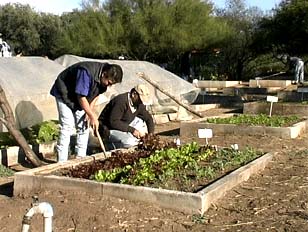
Individualism at work.
If the member has not learned to be reinforced (pleased, satisfied) by working for the community then, some jobs could not be reinforcing for him/her. It is very unlikely that members whose satisfaction at work depends solely on personal gains, will enjoy the various types of work that needs to be done in the community.
On the contrary, members who learn to work with the idea of the common good in mind, will enjoy doing a wide variety of work and will learn to like new ones.
When you are in the community,
please do not expect to work just in jobs you like or prefer.
Frequent questions asked about this area:
1. Who tells the members what work to do?
There are one or more work coordinators. Members choose part of their work for the week and the coordinator suggests the rest. Depending on the number of members, there is more or less opportunity in choosing work. Our goal is that members select the work they want every day. Today, because we have fewer members, we sometimes need to do work we would not have chosen first-hand.
2. What type of work will I do if I live in the community?
It depends. If you have a skill the community needs in a particular moment, you can start by working in this. The work coordinator will give you a list where you mark the skills and mastery you have on each as well as your preferences; you can also mark what you do not know but would like to learn. Based on the results and the needs of the community, you and the work coordinator will write your personal work schedule.
3. Do members receive money for their work?
No. When we work we produce goods and services for our own consumption, this is like an exchange. While I cook for the rest, another member grows vegetables or washes dishes for me, etc. When we work we also produce money, which goes to a common account from which all expenses (personal and communal) are paid.
4. What happens if you do not like doing something, like washing dishes?
Usually there are one or more members who enjoy what others have not learned to enjoy, in this case, they do it for you. However, if you want to learn to like some task that is useful for the community, but which you do not presently like, you can ask the behavior coordinator for a procedure to learn to like it. Of course we do not insure total success.
5. What happens when none of the members like to do something the community needs like cooking on Sundays?
We rotate it. One or two members are assigned for each Sunday. In this way the "aversive" (unpleasant event) is shared and thus reduced for each of us. We would not complain for having to cook one Sunday every two months.
6. To whom do members present complaints or suggestions related with the work they are doing?
To the coordinator of the area in which one is working. For example, if the problem is related to food, it should be presented to the food manager. The coordinators of each area are the ones who can best help the member who has the problem. This procedure prevents complaining to other members who are not as capable as the coordinators in solving the problem. Complaining creates a negative atmosphere.
Last up-date: February, 2002
Go back to the Index.